International Seminar on Green Technology and Cultural Integration for Sustainable Development
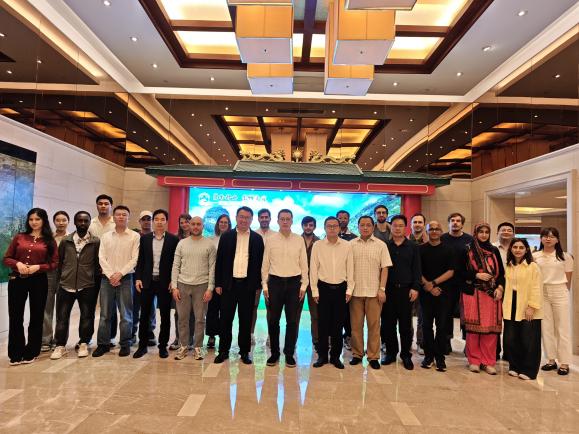
From May 8 to 10, 2026, under the guidance and support of the International Cooperation Bureau and the Shanghai Branch of the Chinese Academy of Sciences, the Shanghai Advanced Research Institute of the Chinese Academy of Sciences (hereinafter referred to as “SARI”) held an International Seminar on Green Technology and Cultural Integration in Nanping City. SARI President Deng Haixiaoattended the event and delivered a speech. Nanping Mayor Lin Jian, Vice Mayor Huang Guicheng, and others guests attended the exchange activities. More than 20 young foreign scholars from 10 countries including Italy, Russia, India, Pakistan, and Algeria participated in the event, covering six research institutes within the Shanghai Branch of the Chinese Academy of Sciences.
In his speech, Deng Haixiao pointed out that this event is a beneficial attempt carried out under the pilot program for international cooperation in the institutes of the Chinese Academy of Sciences. He hopes that young scholars could take this event as an opportunity to explore the integration of green technology with traditional culture, promote cross-cultural dialogue and scientific collaboration, integrate Eastern and Western wisdom, and contribute to a greener and more harmonious world.
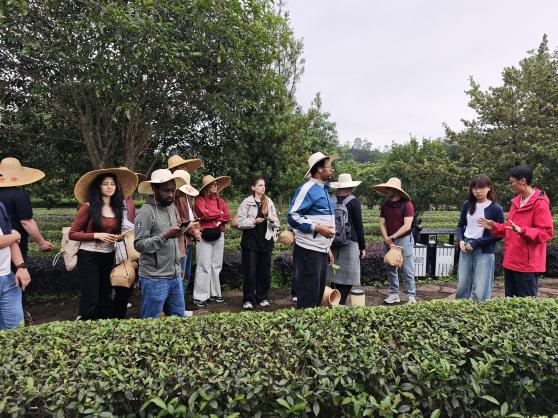
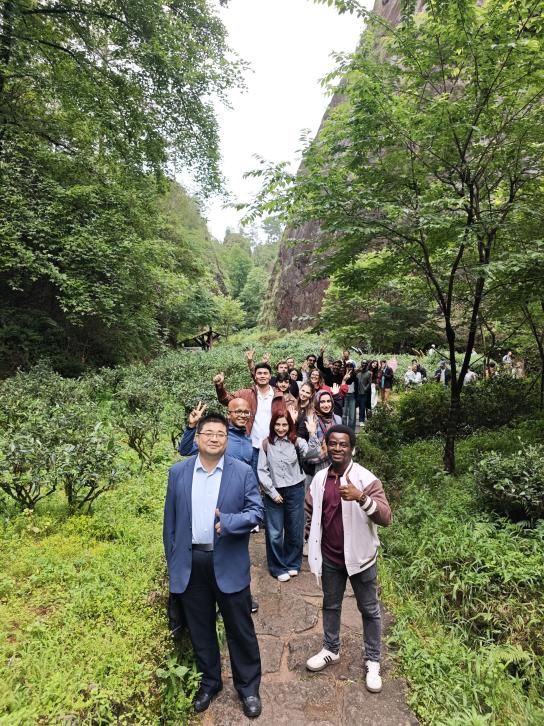
SARI Associate Researcher Zhao Zhijun , Peng Kangming of Nanping Carbon Measurement Center, and representatives of foreign young scholars delivered reports on topics including multi-scenario applications of the “dual carbon” initiative, green technology in the tea industry and overall health, cultural heritage protection, waste recycling, and low-carbon cultural tourism. Participants held enthusiastic discussions on topics such as green development, cultural exchange, and interdisciplinary collaborative innovation, conducted on-site visit of the Tea Technology Industrial Park, surveyed ecological protection in Wuyi Mountain National Park, and visited Mafu Village, an important site for the cultural heritage of Zhu Xi. The foreign young scholars appreciated China’s achievements in green sustainable development and traditional culture protection and expressed their anticipation to act as ambassadors for scientific and cultural exchange in the future, promote international scientific cooperation and mutual learning between civilizations, and contribute to global sustainable development.
 Appendix:
